Tools for Big Feelings
Nature-Based Social Emotional Learning Activities for Kids

These SEL activities use biomimicry and sensory nature-play to help children regulate their nervous systems by following the wisdom of the wild.

The Field Guide to Feelings
Navigate Storms, Fog, and Sunshine with this Interactive Emotions Chart, designed to help bring more joy and peace to your home. Free Printable Version Included!

ANGRY

STRESSED
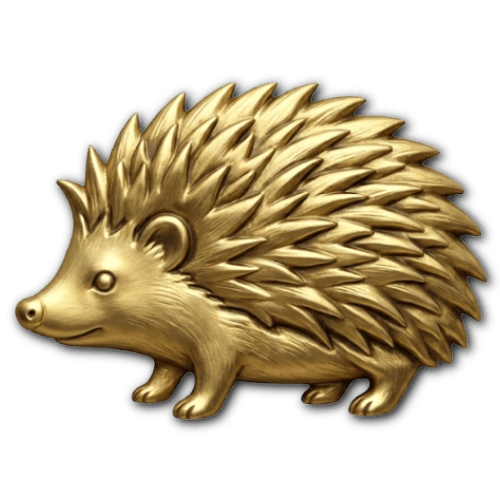
GRUMPY
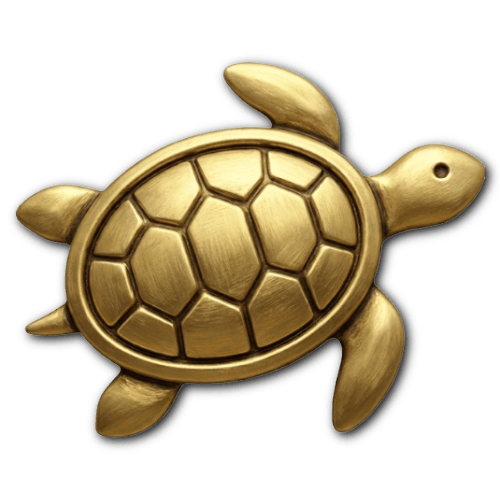
SCARED
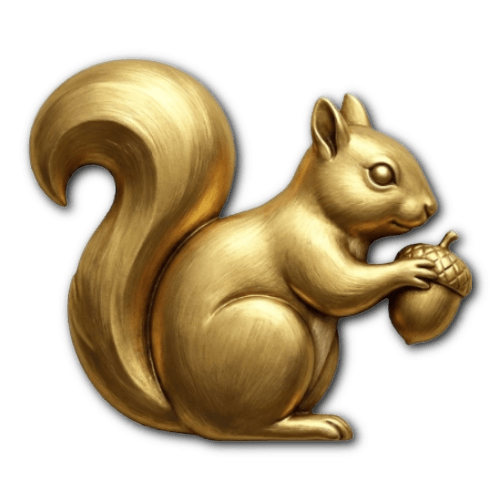
WILD
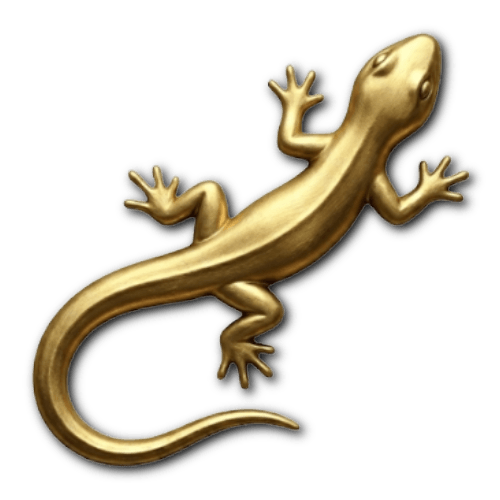
BORED

SILLY
SAD

TIRED

Support Big Feelings at Home
with the Emotional Regulation Bundle
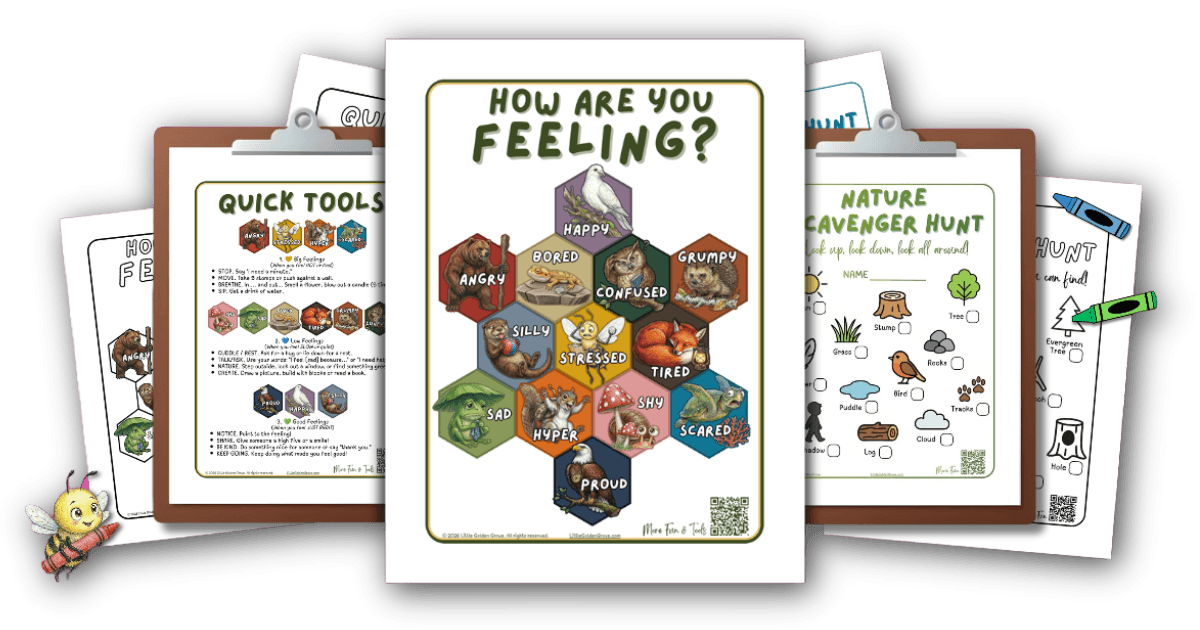
Keep this Emotions Chart and Quick Tools Guide on the fridge or wall so your child can notice and manage emotions as they happen.
The QR code takes you back to this interactive version for extra strategies, and the bonus nature scavenger hunt gives kids a playful way to get moving, reset, and find calm outdoors.
*Join the Little Golden Grove community for more free nature activities and printables. Unsubscribe anytime.
Not ready for the full toolkit? You can still stay in the loop by using the form below! 👇

Join the
Adventure!
Be the first to hear about our first book and get exclusive nature resources sent straight to your inbox!




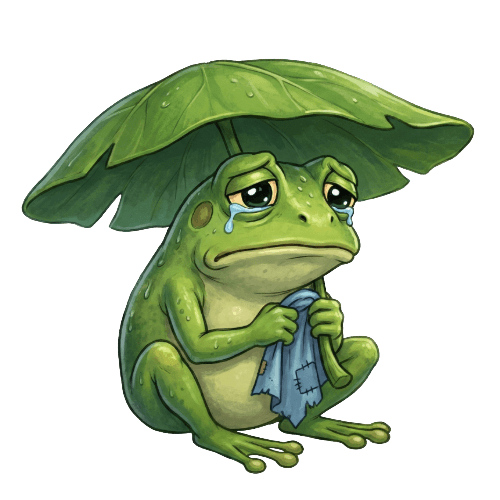
SADNESS
The Healer
"When the world feels a little heavy and you feel like sinking to the bottom of the pond, it’s okay to just 'be.' Even the smallest frog needs a quiet lilypad to rest on until the sun comes back out."
The Action Toolset
💧 Water Wash: Splash some cool water on your face or take a warm bath to help "wash" the heavy feelings away.
🍃 The Lilypad Nest: Build a "soft spot" with blankets and pillows where you can feel tucked in and supported.
💌 Heart Connection: Draw a picture of how you feel or tell a safe adult, "I’m on my lilypad right now," so they know you need a gentle connection.
🕯️ Low & Slow: Dim the lights and listen to a soft story; moving slowly helps your body process the "weight" of the sadness.
What's Next?
Every child experiences the frog differently. For a deeper look at the science behind this feeling and how we navigate it in our unschooling journey, check out the resources below.
Want to keep this guide on your fridge? You can grab the high-resolution, print-ready version of this chart and the full toolkit here.
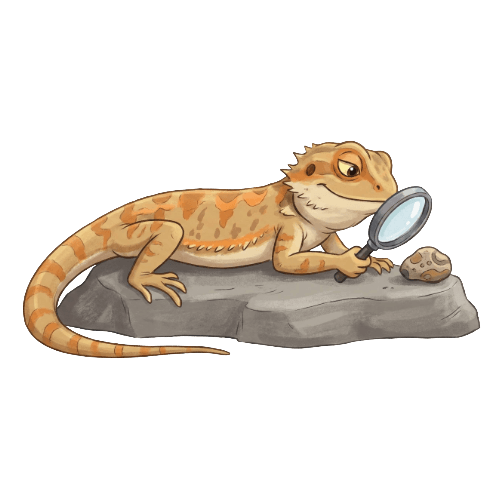
BOREDOM
The Observer
"When the world feels flat and you aren’t sure what to do, it’s time to find a warm rock. Boredom isn't a problem to fix. It’s the quiet space where your next big idea is waiting to grow."
The Action Toolset
☀️ The Solar Recharge: Lay flat on the floor (like a lizard on a warm rock) and try to feel the weight of every part of your body touching the ground.
👁️ The Wall-Eye Search: Stay perfectly still and see if you can spot three tiny things in the room you’ve never noticed before—a crack in the paint, a dust mote, or a pattern in the rug.
🦎 Lizard Crawl: Move as slowly as you possibly can across the room, keeping your belly close to the floor. How slow can a lizard go?
☁️ Cloud Gazing (Internal): Close your eyes and watch your thoughts drift by like clouds. Don’t try to catch them; just watch them pass until one feels interesting enough to follow.
What's Next?
Every child experiences the lizard differently. For a deeper look at the science behind this feeling and how we navigate it in our unschooling journey, check out the resources below.
Want to keep this guide on your fridge? You can grab the high-resolution, print-ready version of this chart and the full toolkit here.
WILDNESS
The Scout
"It feels exciting to have so much energy in your legs and arms! When our bodies feel 'darty' and fast like a squirrel, it can be hard to stop our 'motor.' These tools help us give that energy a job to do so we stay in control."
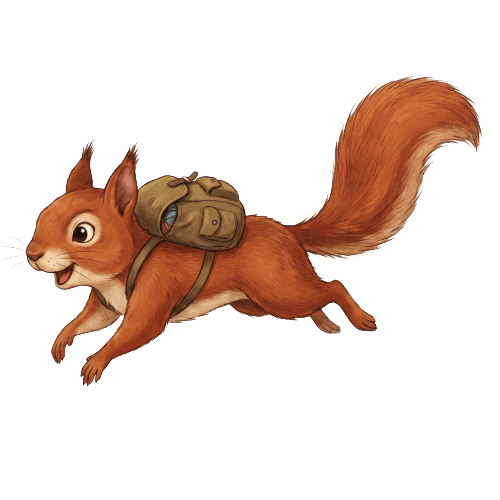
The Action Toolset
🐿️ The Acorn Balance: Put a small pillow or toy on your head. See if you can walk ten steps without it falling off.
🌲 The Branch Reach: Reach your arms as high as you can toward the sky. Stretch for five seconds, then let your arms drop and relax.
🐾 Animal Crawls: Get on your hands and knees and crawl across the room like a heavy bear or a slow turtle. Putting your hands and feet on the ground at the same time helps your brain "organize" its movement.
✋ Stop and Search: Close your eyes and listen. Can you find three different sounds? Identifying sounds forces your brain to "pause" the movement to let the ears take over.
What's Next?
Every child experiences the squirrel differently. For a deeper look at the science behind this feeling and how we navigate it in our unschooling journey, check out the resources below.
Want to keep this guide on your fridge? You can grab the high-resolution, print-ready version of this chart and the full toolkit here.

JOY
(Happy, Calm)
The Peace
"When you feel like a calm dove resting in a tall tree, your heart is steady and your mind is clear. This is your 'home' energy. We can use these tools to enjoy this feeling and share our peace with others."
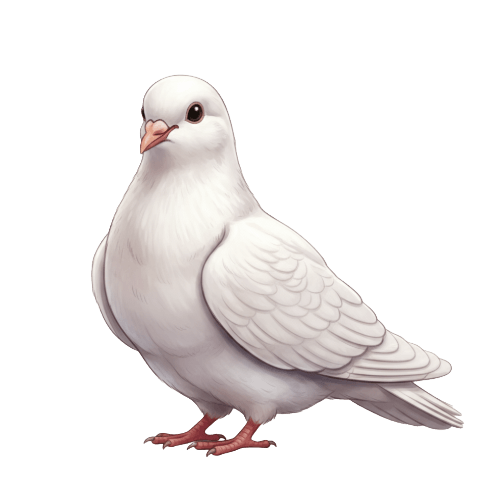
The Action Toolset
✨ The Inner Smile: Close your eyes and think of one thing that makes you feel warm and happy inside. Let that feeling spread from your heart all the way to your toes.
🌬️ The Feather Breath: Imagine a tiny feather is floating in front of your face. Breathe out so softly that the feather stays right where it is without blowing away.
🤝 The Gentle Touch: Place one hand on your chest and one on your belly. Feel them move up and down slowly. This is your "steady beat" that is always there for you.
🌳 The Roots: Stand tall and imagine you have roots growing from your feet deep into the earth. You are strong, calm, and exactly where you need to be.
What's Next?
Every child experiences the dove differently. For a deeper look at the science behind this feeling and how we navigate it in our unschooling journey, check out the resources below.
Want to keep this guide on your fridge? You can grab the high-resolution, print-ready version of this chart and the full toolkit here.
ANGER
The Protector
"It is okay to be angry. The Bear comes to protect you when things feel unfair. We do not hurt others, but we can let the roar out."

The Action Toolset
🐻 The Safe Roar: Growl or roar as loud as you need to into a soft pillow or a folded blanket. This lets the vibration of the anger out of your chest without the noise feeling too scary.
🐾 The Heavy Stomp: March hard or stomp your feet against the ground like a heavy bear walking through the woods. Feeling your "paws" hit the floor helps your brain move the energy down and out of your body.
🧱 The Mountain Push: Put your hands flat against a wall and push as hard as you can for ten seconds. Imagine you are moving a heavy mountain; this helps your big muscles release the "hot" energy of anger.
💧 The Cool Down: Take a slow sip of cool water. Anger creates "heat" in the body, and a cool sensation helps signal to your brain that it is safe to start slowing down.
What's Next?
Every child experiences the bear differently. For a deeper look at the science behind this feeling and how we navigate it in our unschooling journey, check out the resources below.
Want to keep this guide on your fridge? You can grab the high-resolution, print-ready version of this chart and the full toolkit here.
FRUSTRATION
(Grumpy, Annoyed)
The Sentinel
"When the prickles start to come out and everything feels 'too much' or 'not right,' your body is trying to protect your space. It’s okay to need a little distance until the prickles soften."
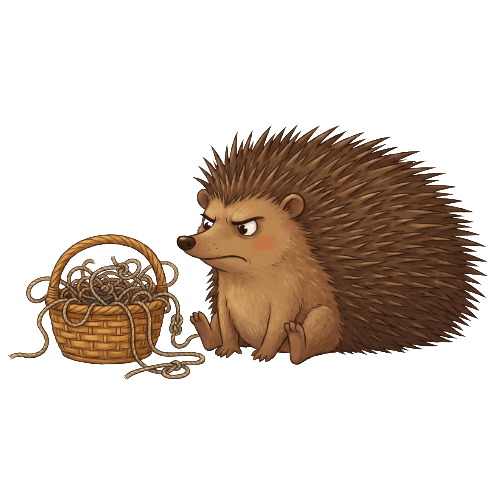
The Action Toolset
🧱 Build a Boundary: Use blocks, cushions, or a "do not disturb" sign to create a physical "no-go zone" where you can be alone with your prickles.
❄️ The Ice Trick: Hold a cold ice cube or a frozen orange; the intense cold helps "shock" the nervous system out of the grumpy spiral.
🖍️ Scribble Release: Take a dark crayon and scribble as hard as you can on a piece of paper to move that prickly energy from your hands onto the page.
🎧 Sound Sanctuary: Put on noise-canceling headphones or listen to a favorite song to block out the "annoying" sounds of the world.
What's Next?
Every child experiences the hedgehog differently. For a deeper look at the science behind this feeling and how we navigate it in our unschooling journey, check out the resources below.
Want to keep this guide on your fridge? You can grab the high-resolution, print-ready version of this chart and the full toolkit here.
TIREDNESS
The Den
"When your body feels heavy or your brain feels 'fuzzy,' it’s a sign that your energy is running low. Sometimes being over-tired can make us feel grumpy or hyper, but that’s just our body asking for a quiet moment to recharge."
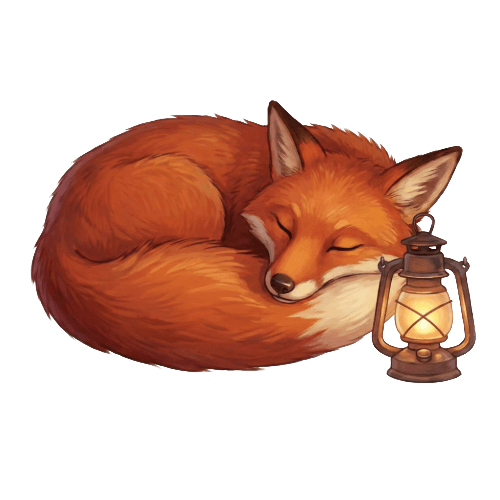
The Action Toolset
🦊 The Tail Curl: Sit or lay on your side and pull your knees up toward your chest. This "tucked" position helps your body feel safe and contained when you’re feeling worn out.
👂 Listen to the Quiet: Close your eyes and see if you can hear your own breathing. Try to make your breath as quiet as a fox moving through soft leaves.
☁️ The Heavy Blanket: Place a heavy blanket or a large pillow over your legs while you sit. Feeling that weight helps your muscles relax and tells your brain it’s okay to slow down.
🦶 Feet on the Ground: If you are sitting up, press your feet flat into the floor and feel the "sturdiness" of the ground. It helps you feel steady when your mind is feeling "drift-y" or overtired.
What's Next?
Every child experiences the fox differently. For a deeper look at the science behind this feeling and how we navigate it in our unschooling journey, check out the resources below.
Want to keep this guide on your fridge? You can grab the high-resolution, print-ready version of this chart and the full toolkit here.
FEAR
(Anxiety, Embarrassment)
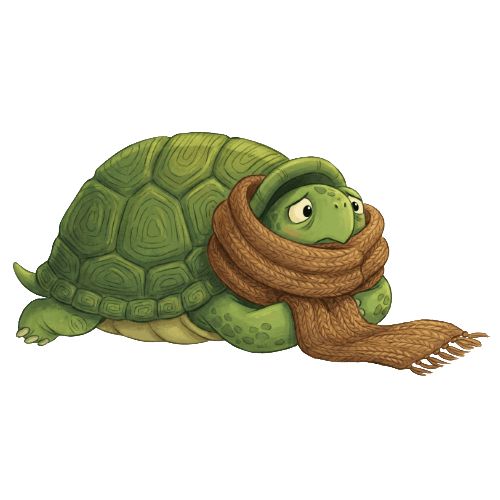
The Shelter
"When the heart beats fast and the world feels a little too exposed, it’s okay to tuck into your shell. We’ll stay here in the quiet until it feels safe to peek back out together."
The Action Toolset
🏠 The Safe Shell: Create a "soft spot" with blankets or pillows where they can retreat without pressure to talk.
🐚 Firm Pressure: Use a weighted lap pad or a "shell" hug to help ground the nervous system while they are tucked in.
🕯️ Low Sensory Input: Dim the lights or turn off background music to make the "shell" feel like a true sanctuary.
🤝 Quiet Presence: Stay close by without asking questions; your calm presence proves that the world is safe again.
What's Next?
Every child experiences the turtle differently. For a deeper look at the science behind this feeling and how we navigate it in our unschooling journey, check out the resources below.
Want to keep this guide on your fridge? You can grab the high-resolution, print-ready version of this chart and the full toolkit here.
SILLINESS
The Wiggles
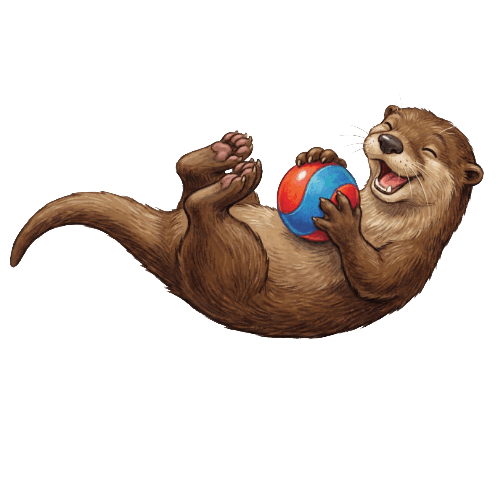
"Being playful and silly feels great! Sometimes our energy gets so fast that it’s hard to stop or listen. We can use these tools to 'downshift' our speed while keeping our joy when it's time to focus."
The Action Toolset
🌊 The River Sway: Stand up and gently sway your body from side to side like a piece of seaweed moving in a slow river. This helps your "wiggles" turn into a calm, steady rhythm.
👏 The Otter Clap: Stretch your arms wide, then bring them together for one big, slow "clap." Do this five times, moving as slowly as you can each time to help your body find its "brakes."
🌬️ The Slow Bubble: Pretend you have a bubble wand. Take a deep breath and blow out as slowly and gently as you can to make a giant, invisible bubble. If you blow too fast, the bubble pops!
🐚 The Treasure Hold: Pick up a small object (like a toy or a smooth stone) and hold it tightly in your palm. Focus only on how heavy or cool it feels against your skin for ten seconds.
What's Next?
Every child experiences the otter differently. For a deeper look at the science behind this feeling and how we navigate it in our unschooling journey, check out the resources below.
Want to keep this guide on your fridge? You can grab the high-resolution, print-ready version of this chart and the full toolkit here.
STRESS
The Worker
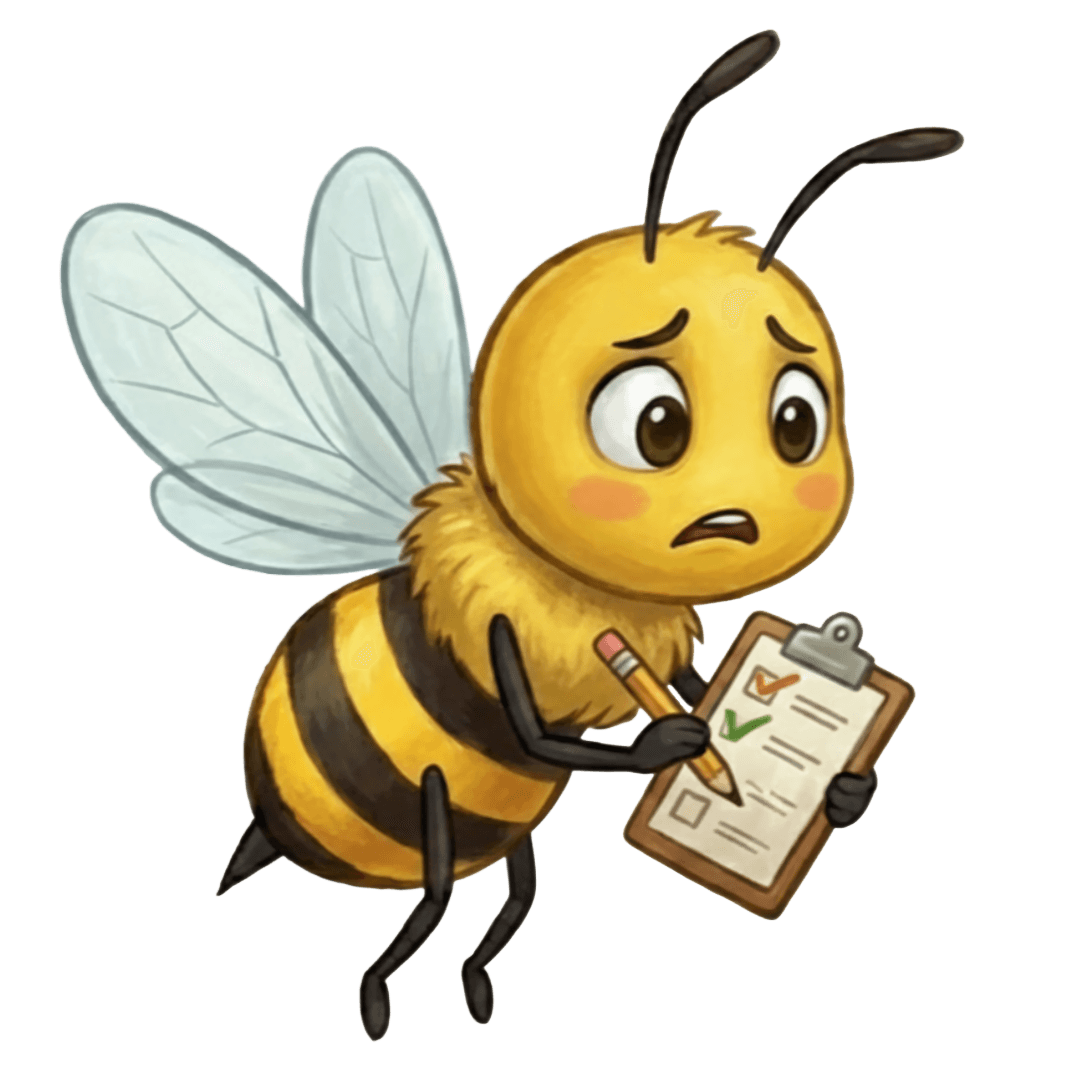
"When there is too much noise, too many chores, or too many big feelings at once, it can feel like a loud 'buzz' inside your head. When we feel overwhelmed, we need to stop flying for a moment and land on just one thing."
The Action Toolset
🌸 The Rule of One: Pick just one thing to look at or one small job to do. Focusing on one "flower" at a time helps the loud buzzing in your brain go quiet.
🐝 The Humming Breath: Take a deep breath in and make a low "mmm" humming sound as you breathe out. Feel the vibration in your chest; it helps your body feel steady when your mind feels scattered.
🧤 The Tight Squeeze: Cross your arms and give your shoulders a firm squeeze, or push your hands hard against your thighs. This helps you feel your "edges" when the world feels too big or loud.
🌲 The Nature Look: Look out a window or step outside for a moment. Find something that isn't moving, like a tree or a rock, and count to ten while you look at it.
What's Next?
Every child experiences the bee differently. For a deeper look at the science behind this feeling and how we navigate it in our unschooling journey, check out the resources below.
Want to keep this guide on your fridge? You can grab the high-resolution, print-ready version of this chart and the full toolkit here.