5 Nature-Based Social Emotional Learning Activities for High-Energy Kids (That Don't Require Sitting Still)
If I ask my boys to sit at a table and fill out a "feelings worksheet," they will last about 30 seconds. Actually, that might be generous… maybe 15.
The truth is, for many kids (especially high-energy boys), sitting still is the absolute hardest way to learn. When their bodies are wiggling, their brains are often offline.
But as homeschooling parents, we know that social emotional learning activities are vital. We want to raise kids who are empathetic, self-regulated, and brave.
In our home, we’ve found that we don't need to stop the wiggles to learn empathy, we need to use them. We take our lessons outside. Nature provides the perfect, judgment-free zone to practice big feelings without four walls closing in.
Here are 5 simple, movement-based activities we use to build character and connection…no worksheets required. ;)
In this post:
Heavy Work: How lifting heavy things calms the nervous system.
Bug's Eye View: Using nature to teach perspective (and meet my book character!).
The Storm Run: A physical way to release anger safely.
Grounding Hunt: Using the 5 senses to stop anxiety.
Careful Carry: A game to teach gentleness to high-energy boys.
1. The "Heavy Work" Hike (Emotional Regulation)
Have you ever noticed that a meltdown often happens when a child feels out of control? When kids are frustrated, anxious, or just "too much," their nervous systems are often seeking input. They need what occupational therapists call proprioception or "heavy work." This is a classic sensory processing tool.
We can't work on emotional regulation for kids until the body is calm.
The Activity:
Head to the woods (or the backyard) and give them a "Mission Impossible" job that requires heavy lifting.
-Ask them to help you move a large log to clear a path.
-Have them carry a backpack filled with water bottles.
-Challenge them to push a "boulder" (a big rock) to build a wall.
The Lesson:
Physical exertion burns off the adrenaline of big emotions. While they work, you can talk about how good it feels to use their strength. It teaches them:

I can channel my big, chaotic energy into doing something hard and helpful.
2. The "Bug’s Eye View" (Perspective Taking)
One of the hardest social-emotional skills for young kids to master is perspective-taking, the ability to step outside their own big feelings and imagine what someone else might be experiencing.
You can try to explain this concept at the dinner table, but for high-energy kids, it clicks much faster when they experience it physically.
The Activity:
Find a patch of tall grass or a pile of leaves and have your child lie flat on their belly. Ask them to imagine they have shrunk down to the size of an ant or a bee.
Ask them questions to guide their imagination:
"What does that blade of grass look like now? (A giant tree?)"
"What does my shoe look like from down there? (A mountain?)"
"If a giant foot came down next to you, how would you feel?"
The Lesson:
Changing their physical perspective changes their emotional perspective.
By physically changing their view, they learn that the "truth" changes depending on where you are standing.
This concept is actually the heartbeat of the children's book I’m currently writing, BayBee and the Giant. In the story, a little bee is terrified of a "Giant" (a little boy) because he’s heard stories about how dangerous giants are. But when they finally meet face-to-face, the bee realizes the "Giant" is actually scared of the bee!
It’s a fun way to talk to kids about how fear often comes from simply not seeing the whole picture… and how scary things become a lot less scary when we get curious enough to look at them from a different angle.
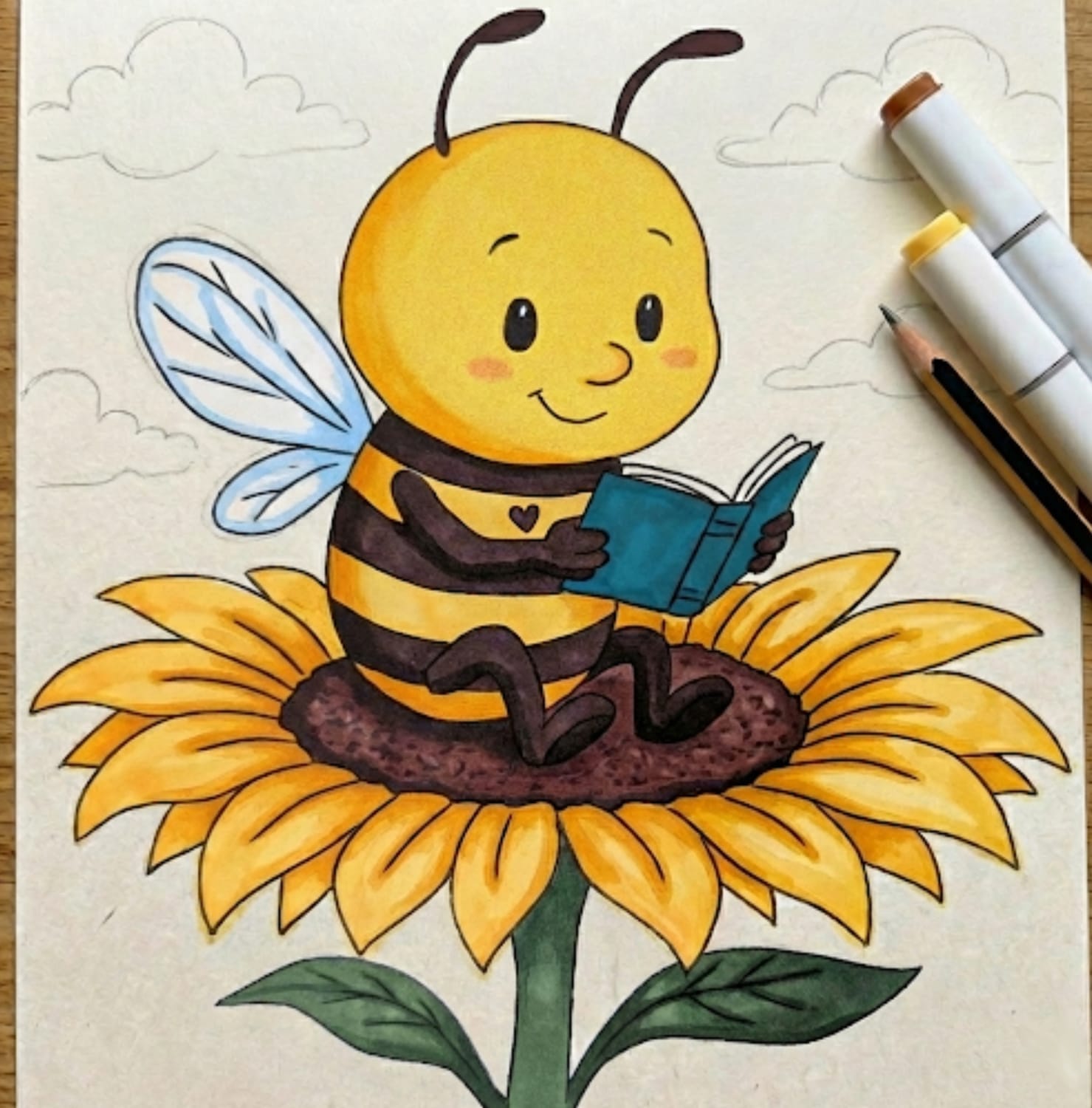
(Want to be the first to know when BayBee and the Giant is released?
Join the Little Golden Grove newsletter!)
3. The Grounding Hunt (Mindfulness)
Sometimes, our kids' brains get like a shaken snow globe, thoughts and worries are flying everywhere. When anxiety or energy gets too high, we need to focus on details to "ground" them back in the present moment.
The Activity:
Send them on a targeted hunt for specific sensory items.
-Find something fuzzy.
-Find something brown.
-Find a smooth rock.
-Find a feather.
The Lesson:
This forces their brain to switch from "Chaos Mode" to "Focus Mode." They have to slow down their bodies to find the small things.
Need a ready-made list?
You don't have to come up with these on the fly! I created a beautiful, illustrated printable checklist that your boys can carry on a clipboard. It has pictures for non-readers, too!
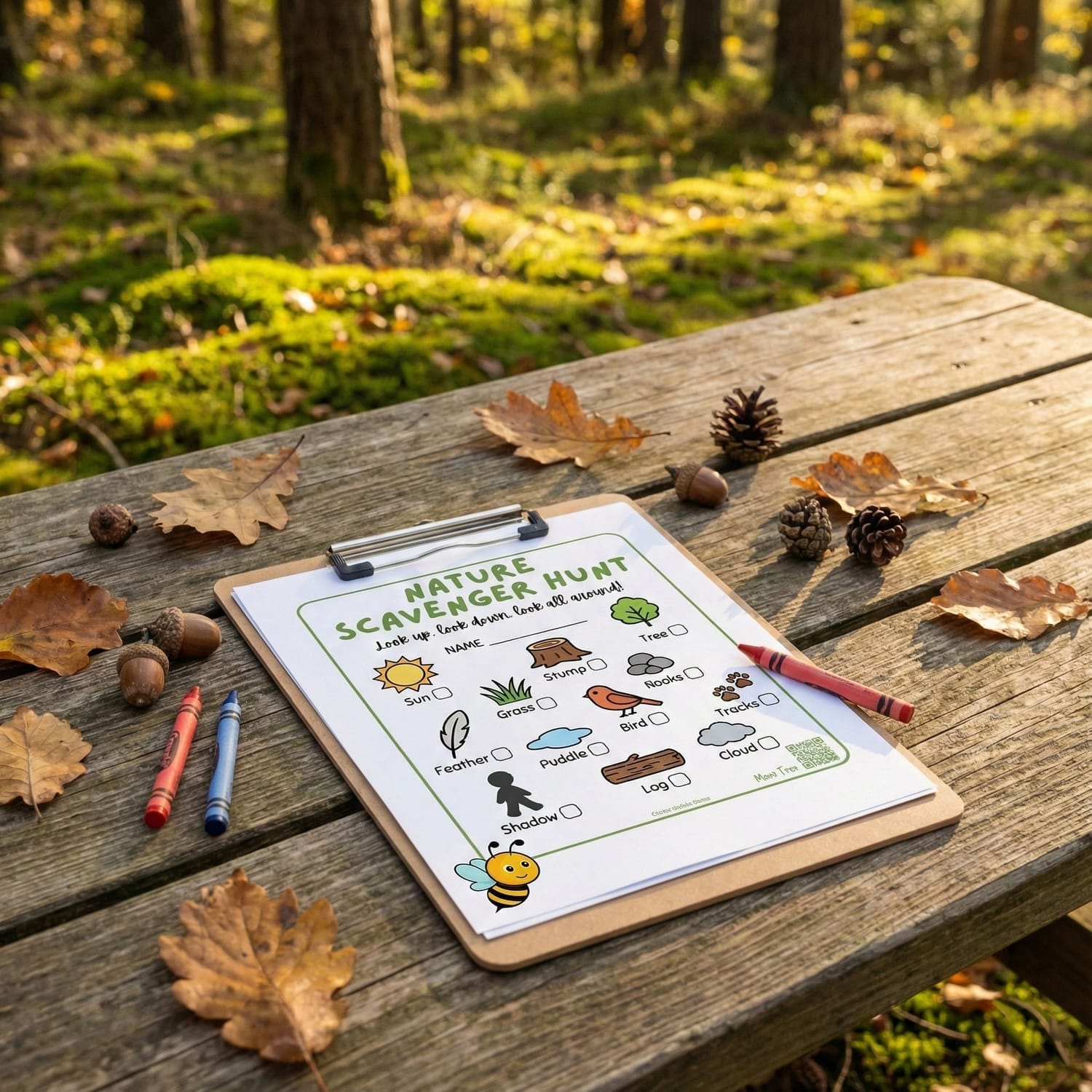
Sign up and Download my Free Nature Scavenger Hunt Pack!
4. The "Storm" Run (Emotional Release)
We often teach kids to "be quiet" when they are angry, but sometimes anger needs to come out before it can go away. Nature is big enough to handle their biggest roar.
The Activity:
If you notice frustration building, challenge them to a "Storm Run." Pick a specific tree in the distance. Tell them to run as fast as they can to that tree and "roar" like the wind the whole way there.
But here is the catch: Once they touch the tree, the storm is over. They have to walk back to you slowly, taking deep breaths, like the calm air after a thunderstorm.
The Lesson:
Emotions are like weather. They blow through, they get loud, and then they pass.
We don't have to be afraid of the storm, but we do have to learn how to let it pass.
5. The "Careful Carry" (Empathy & Gentleness)
For boys who are used to wrestling, jumping, and crashing, practicing gentleness can be a challenge. This activity turns gentleness into a game.
The Activity:
Find something incredibly fragile in nature—a dried autumn leaf that crumbles easily, a dandelion seed puff, or a tiny shell.
Challenge them to carry it a long distance (maybe all the way back to the car or house) without breaking it. They have to cup their hands, walk carefully, and protect it from the wind.
The Lesson:
This builds physical empathy. It is a tangible way to practice being a "gentle giant."
They learn to adjust their own strength to protect something smaller than themselves.
Conclusion
We don't need four walls to learn about our hearts. Sometimes we just need a little fresh air and a lot of space to run.
By moving their bodies, shifting their perspective, and engaging with the wild world around them, our kids are learning the biggest lessons of all: how to be brave, how to be kind, and how to handle the storms inside them.
Which of these social emotional learning activities will you try first?
If you want to get started with the Scavenger Hunt mentioned above, don't forget to grab your free copy below!

Stay Connected!
Grab our signature nature scavenger hunt and get occasional updates on new nature-based tools & resources!