The Strength of the Bear: Navigating Big Feelings with Heavy Work & SEL
*This post contains affiliate links. As an Amazon Associate, I earn from qualifying purchases. Thank you for supporting our little grove!
Key Takeaways:
Anger is Protection: We view aggression as a "Protector" (The Golden Bear) trying to keep the child safe, not a behavior to punish.
Action Over Words: A dysregulated child cannot hear lectures. They need "Heavy Work" (proprioceptive input) to calm the nervous system. We share 8 SEL activity ideas for outdoors/indoors.
Finding the Outlet: Whether it's a rock wall or a Jiu Jitsu mat, high-energy kids need a dedicated space where their intensity is celebrated, not shushed.
When your child is in the middle of an "Anger Storm," it can feel like a wildfire. The air in the room shifts; one moment everything is fine, and the next, your child has transformed into a grizzly - loud, powerful, and explosive.
As parents, our reaction is often to try to "shush" the fire or talk them down. But when a child is in "Bear Mode," their brain isn't ready for a lecture. They don’t need words; they need to move.
In our home, we try not to view this anger as a behavior to be corrected. We instead view it as a high-energy "big feeling" looking for a safe place to land. We look to The Protector (our Golden Bear) to understand this energy.
We call him the Protector because anger, at its core, is a powerful force meant to keep us safe. The goal of Emotional Regulation isn't to get rid of the Bear; it's to teach the Bear how to be strong and to express themselves in an appropriate way, without harming themselves or others.

The Science: Why the "Protector" Roars
For children, aggression is often the result of a nervous system entering "fight or flight" mode. The Protector thinks there is a threat, but the child lacks the emotional vocabulary to process it.
To help them find their way back to "Calm," we use Heavy Work.
Heavy Work involves activities that push or pull against the body. This provides proprioceptive input, the feeling of pressure in the joints and muscles that tells the brain exactly where the body is in space. It signals to the Protector: "We are safe, we are grounded, and we can relax now."
💡 The Language of the Bear (Parent Scripts)
It is hard to remember what to do when emotions are high. We often default to "Stop it!" or "Calm down!" but the Bear doesn't speak that language.
Here are a few "invitations" to heavy work that you can use when you see the energy rising:
Instead of: "Stop kicking the sofa!"
Try: "I see your legs have a lot of power right now. Can you show me how hard you can push against this wall?"
Instead of: "You are being too rough!"
Try: "The Bear is here! He looks strong. Let's take him to the crash pad and see how fast he can log roll."
Instead of: "Calm down right now."
Try: "You are safe. I am right here. Let's squeeze the Bear tight (in a blanket) until he feels ready to rest."
8 Heavy Work Activities
for kids
These nature-inspired Social Emotional Learning (SEL) activities provide the deep sensory input needed to reassure children with big feelings.
Outdoor Adventures (Wild Play)
When the Bear takes over, we head outside. Physical resistance is one of the fastest ways to reset a dysregulated nervous system.
The Log Roll: Have your child roll down a grassy incline, then "bear crawl" back up on their hands and feet. The resistance of the climb provides intense heavy work.
The River Stone Relocation: Give them a "mission" to move large stones, heavy branches, or logs to build a "Protector's Fortress."
The Rock Wall Challenge: Climbing provides intense input to the joints. If you don't have a wall, have them climb over logs, rocks, or even up a tree if they can do it safely.
Puddle Stomping: Don't fear the mud! High-energy stomping in puddles provides a physical impact that acts as a great sensory release.
Indoor Resets (The Calm Corner)
Once the "big roar" has been processed through the muscles, the Bear needs to find its way back to the quiet of the den. Or maybe you're just not able to get outside in the moment. Try these calm down corner ideas.
The Human Burrito: Wrap your child snugly in a heavy blanket and give them gentle "squishes." This deep pressure is a classic tool for calming a stressed nervous system.
The Den Build: Use couch cushions to build a heavy, enclosed space where the Bear can finally feel safe enough to rest.
Wall Pushes: Have your child try to "push the wall into the next room." This static resistance helps ground explosive energy without destroying the house.
Animal Yoga (Biomimicry): Holding a "Bear Pose" (wide-legged downward dog) and "walking" across the carpet requires the strength and focus of a calm Protector.
The Rhythmic Reset: We often use the piano or a drum to transition from loud energy to quiet. The repetitive, tactile nature of pressing keys or tapping a slow heartbeat helps the heart rate settle.
🎵 A Song for the Bear Sometimes, the easiest way to shift the energy is through music. We created this "Anthem for the Bear" to help bridge the gap between the storm and the calm. Play this when you need a reset.
🛠️ Tools for the Bear
You don't need fancy equipment to do heavy work, but having a few tools on hand can make "Bear Mode" much easier to manage. Here are a few ideas:
Climbing Holds: You could install these on a simple plywood board in the backyard. It’s an instant energy burner.
Weighted Blanket: Essential for the "Human Burrito." The extra weight provides immediate calming input.
Crash Pad: Perfect for indoor log rolls or roughhousing safely.
Punching Bag: There are some made specifically for children, but I like punching it too, makes for a fantastic workout!
The Bridge: Finding Your Child's "Mat"
Sometimes, home activities aren't enough for the highest energy "Bears." They need a dedicated space where they are allowed (and encouraged) to be physically powerful.
As an unschooling mom, I facilitate my children’s needs by following their lead. For us, that outlet became Jiu Jitsu (BJJ).
Note: Jiu Jitsu isn't the only answer. For your child, the "mat" might be a gymnastics floor, a swimming pool, or even heavy farm work. The goal is simply to find a place where their physical intensity is a strength, not a problem.
Why We Chose the "Gentle Art"
I started practicing BJJ myself and loved the focus, but I hesitated for my boys. I worried: If they already struggle with anger, will teaching them to fight make them more aggressive?
What I discovered is that BJJ is the ultimate "pressure cooker" for learning emotional regulation. It doesn't teach them to be aggressive; it teaches them how to stay calm under pressure.
1. The Art of Control
Unlike striking arts (Karate or Taekwondo), BJJ is focused on "control." There is no punching or kicking. Kids learn how to neutralize a situation using leverage. They practice staying calm while someone is holding them down - a massive lesson in regulation.
2. A Safe Sensory Outlet
Many "aggressive" kids just have a high sensory need for physical contact. BJJ gives them a place to be 100% physical so they don't feel the need to "explode" at home.
3. Breathing Under Pressure
One of the first skills on the mat is learning to breathe when you're in a "bad" or tight position. This is the exact skill needed when a child gets angry - learning to find their breath instead of lashing out.
4. Quiet Confidence
In a BJJ gym, kids learn that aggression doesn't win, technique and calmness do. Knowing they can defend themselves gives them the confidence to walk away from a fight. Surprisingly, the "ego" often drops once they have a professional outlet for their energy. They no longer feel the need to prove they are tough through aggression at home.
Closing the Loop: The Repair
The most important part of this process happens after the heavy work is done. Once the energy is spent and the Protector has stood down, your child needs connection.
They need to know that you aren't afraid of their Bear. A simple hug, a quiet moment, or a whispered "I love you, you're safe" tells them that their big feelings didn't break your bond.
The Bottom Line
Anger isn't a "bad" emotion; it’s just a big one. When we try to suppress the Bear, it only gets louder. But when we meet that energy with heavy work and give it a safe place to land—whether that's a rock wall, a pile of river stones, or a Jiu Jitsu mat—we teach our children a vital lesson:
They don't have to fear their own power. They have the strength to climb their own mountains.

Stay Connected!
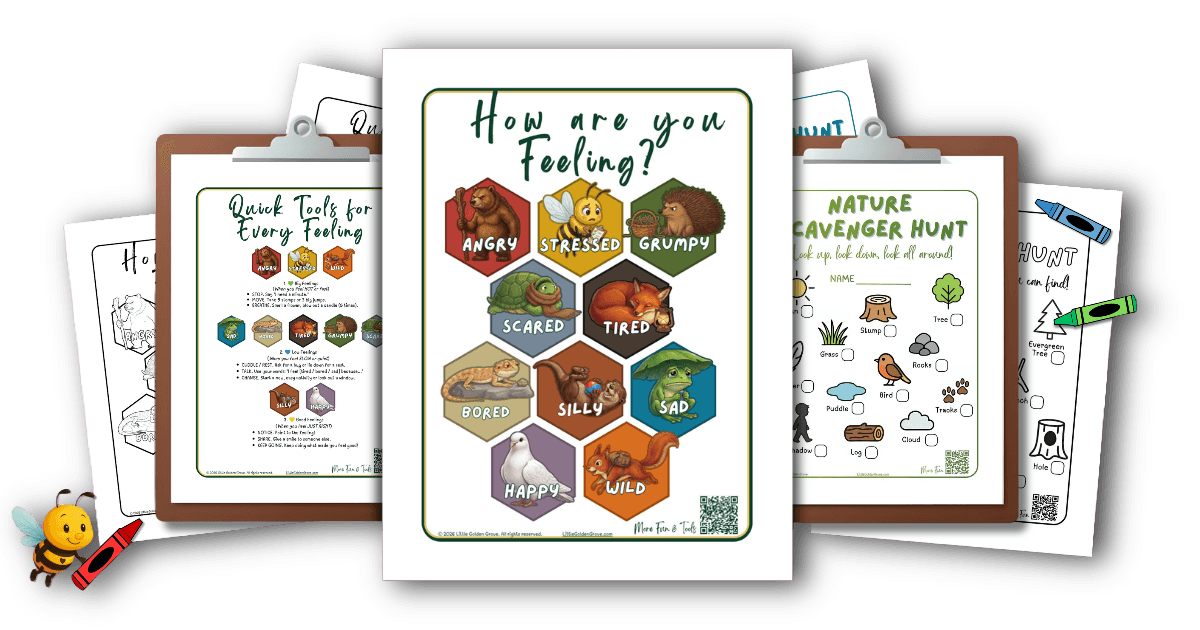
Grab our signature nature scavenger hunt and get occasional updates on new nature-based tools & resources!