Elimination Communication at 8 Months: Why We’re Doing It (Cloth Diapers, Cues, and Potty Learning)
As an unschooling mom, I’ve learned to trust something most parenting advice ignores: babies are whole people from the very beginning. Not projects. Not blank slates. Not little creatures we manage until they’re “ready.”
That’s the heart behind why we started elimination communication with our third baby. This is our first time trying it. We didn’t do it with our older two boys. And honestly? I wish we had.
What Is Elimination Communication?
Elimination Communication (EC) is the practice of responding to a baby’s natural need to eliminate by offering a potty, rather than relying solely on diapers. It’s not early potty training. It’s not pressure. It’s simply communication.
We still use diapers. But we chose cloth this time.
We started cloth diapering to:
-Save money (three boys adds up)
-Help him recognize the feeling of wetness
-Reduce waste for the environment
-And because it felt aligned with how we live and parent
But EC became something deeper than that.
“Let Babies Be Babies”
I hear this counterargument a lot. Let babies be babies.
Here’s the thing: babies are wired to communicate. From birth. They signal hunger. They signal tiredness. They signal discomfort. Why would eliminating be any different?
Responding to a baby’s cues isn’t rushing them. It’s respecting them.
If anything, EC has made me slow down and pay closer attention. That’s unschooling from birth. We observe. We respond. We trust development instead of forcing it.
How We Actually Do It
We didn’t start by “reading cues.” We didn’t even know what to look for.
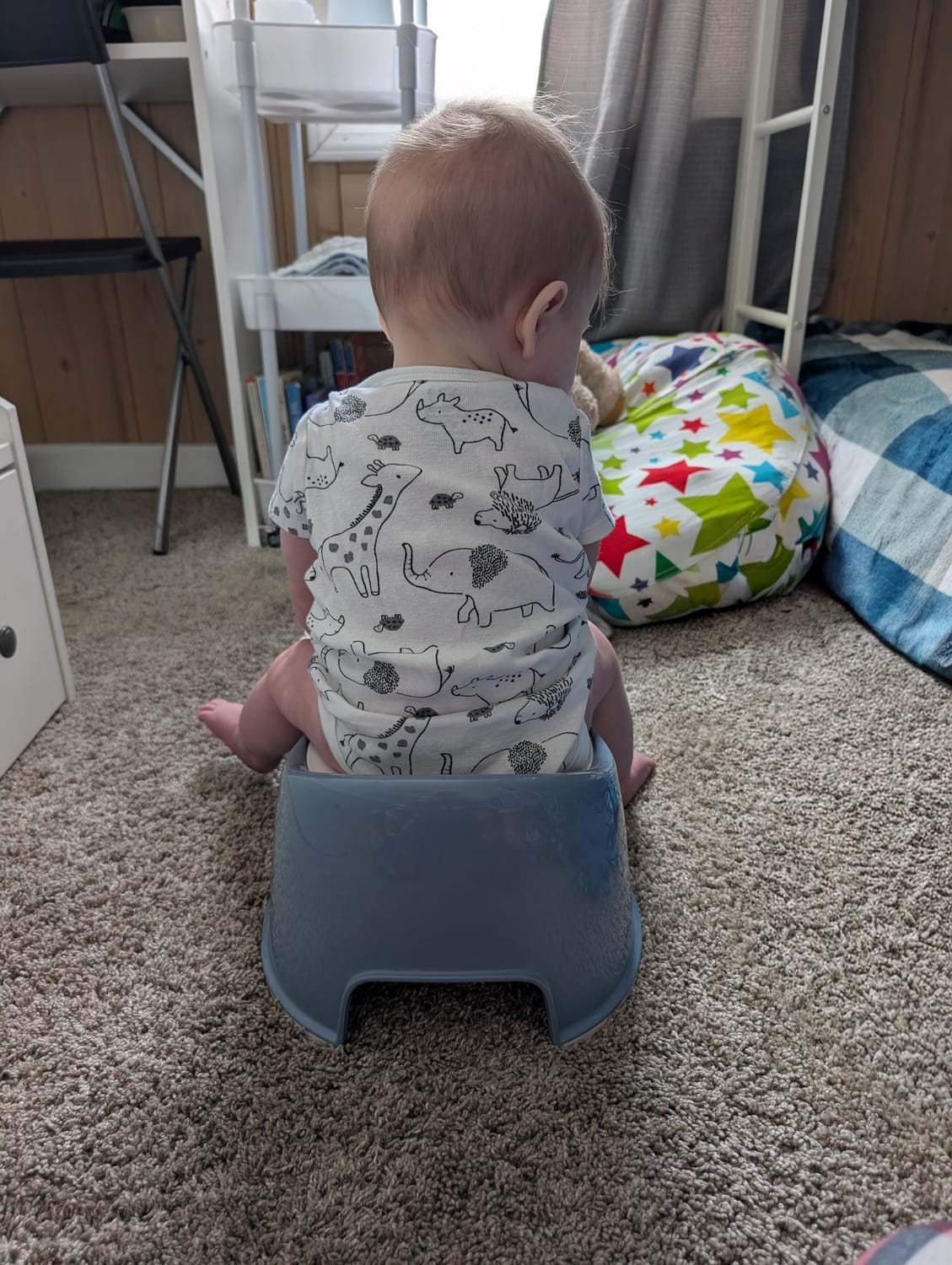
In the beginning, it was just part of our rhythm. Before naps, after eating, and at every diaper change, we’d offer the potty and make a simple sound cue.
From the very beginning, he would go almost every time we offered. Not because he was trained, but because the timing made sense.
For months, that’s all we did. No stress. No tracking apps. No obsession over catching everything. Just grateful for every saved diaper!
Then recently, around 7 months, something shifted. We started noticing actual cues! A certain look. A little pause. A subtle change in his body...
And now? He signs “potty.” We sign before we go every single time. And now he’s starting to sign when he needs to go.
That moment, when your baby signs and you understand, is one of the best feelings in the world.
It’s connection.
It’s Not All or Nothing
Let me be clear. We don’t catch everything. We don’t expect to catch everything. There are misses. There are lazy days. There are times we just use the diaper and move on, especially when we're out and about... This isn’t about perfection.
But here’s something wild: He’s almost 8 months old and I can still count the number of leaks and blowouts he’s had on one hand.
With three boys, that feels like a small miracle. Life is simpler. Less laundry. Less mess. Less guessing. And he feels dry more often than not.
Cloth + EC = A Powerful Combo
Cloth diapers have been huge for this process. Disposable diapers are designed to wick moisture away so efficiently that babies barely feel wet. Cloth lets him notice the sensation. Not in a harsh way, just in a natural cause-and-effect way.
Wet → feels different → connection builds. It’s gentle awareness. And it saves money. And it keeps a mountain of waste out of landfills.
Cloth diapering isn't necessary to do elimination communication, but for us, it made sense to give it a try and we're glad we did.
What About Readiness?
People ask:
Isn’t this too early? Aren’t you forcing independence?
No. We’re not expecting independence. We’re offering support. He isn’t responsible for making it to the potty. We are.
We offer. He responds. Or he doesn’t.
There’s no reward. No punishment. No pressure.
Just communication.
That’s unschooling in its purest form.
Will This Help With Potty Training Later?
We hope so. I won’t pretend that’s not part of the motivation. We’re hoping that by honoring his body’s signals now, by building awareness and language around it early, potty learning down the road will feel more natural and less like a battle.
But we don’t have expectations. We’re not measuring success by how early he’s “trained.” We’re not chasing a timeline. If he needs more time later, that’s okay. If it’s seamless, great. If it’s messy, we’ll handle it then. Right now, we’re focused on relationship and communication. The rest will unfold.
If You’re Considering Elimination Communication
Here’s everything I wish someone had told me:
You don’t have to catch everything. Even catching one pee a day builds awareness.
Start with routine timing. After sleep and after meals are gold.
Use a consistent sound cue.
Sign every time you go.
Keep it relaxed. If you’re stressed, take a break.
Expect seasons. Some weeks you’ll catch everything. Some weeks you won’t.
Nighttime can be separate. Do what works for your sanity.
There is no timeline. This is not potty training.
If it stops feeling good, pause. Connection matters more than consistency.
Trust your baby. They are far more aware than we give them credit for.
Why We’re Doing This
We’re doing EC because it deepens connection. Because it builds trust. Because it reduces waste. Because it saves money. Because it makes life easier. Because it’s fun (yes, fun) to communicate with your baby in this way.
Mostly?
We’re doing it because it just makes sense. Unschooling doesn’t start at five years old. It starts at birth.
It starts when we choose relationship over control. When we choose observation over assumption. When we choose trust over timelines.
EC fits right into that philosophy: we observe our baby, respond to his cues, and give him the language to communicate his needs — all without pressure or expectation.
Our baby is almost 8 months old. He can sign potty. He feels heard.
And I am genuinely enjoying this part of motherhood.
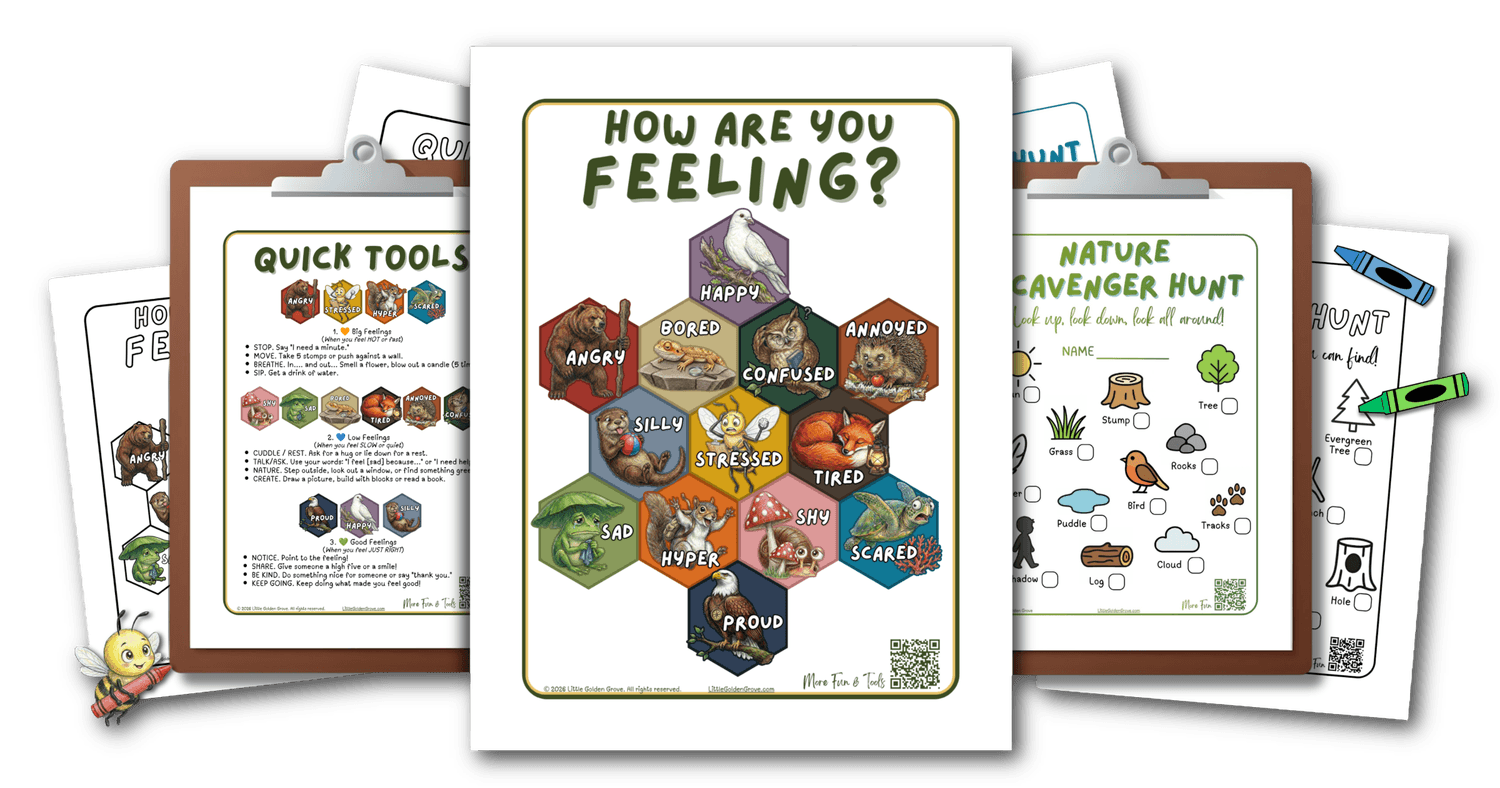
If you love the idea of giving your baby language for their needs, why stop there? As your children grow, helping them name and express their feelings is just as powerful.
That’s why I created a free emotional regulation bundle, a simple tool to help kids identify, share, and understand their feelings at any age.
Grab it here and keep building communication, connection, and trust with your children.

Stay Connected!
Grab our signature nature scavenger hunt and get occasional updates on new nature-based tools & resources!